
Planning flowers for wedding day usually starts with one simple goal: make the whole celebration feel cohesive. The easiest way is to plan by location, starting at the ceremony, then moving to personal florals, then the reception.
In Australia, season, travel time, and venue rules matter more than most couples expect. This guide breaks down what to use, where it goes, and how to keep it looking fresh from “I do” to the last dance.
What do flowers for the wedding ceremony usually include?
Most ceremony flowers for wedding setups focus on a few hero pieces that frame the couple and photograph well. They typically include an arbour arrangement, aisle markers, and a signing table feature, with optional pew ends or chair posies.
In Australian venues, ceremony styling often needs to be quick to install and easy to move. Florists commonly design ceremony pieces to be repurposed into the reception to maximise value.
Where should the statement ceremony florals be placed?
Statement ceremony flowers for wedding are best placed where guests and cameras naturally look first. That usually means the arbour or backdrop, plus a grounded arrangement at the base to add depth.
For beach or garden ceremonies in places like Byron Bay or the Mornington Peninsula, placement also depends on wind and sun. Securing mechanics and choosing hardy blooms helps arrangements hold their shape.
How can couples keep ceremony flowers looking fresh outdoors?
Freshness is mainly about hydration, shade, and timing for flowers for wedding used outdoors. Florists typically deliver as late as practical and keep delicate blooms conditioned until setup.
Australian heat can be intense, especially in Queensland and inland NSW. Using sturdy blooms, avoiding direct midday sun, and selecting foam-free water sources where possible can reduce wilting and browning.
What flowers are used for bridal and bridesmaid bouquets?
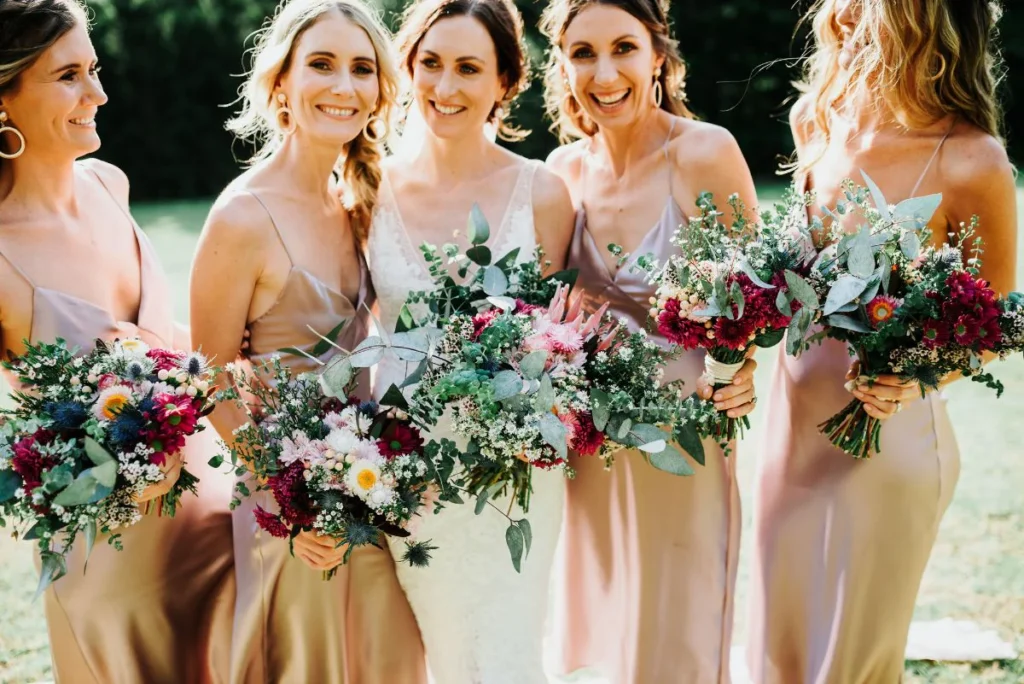
Bouquets are the most personal flowers for wedding choice because they appear in close-up photos all day. Bridal bouquets often use premium focal blooms with softer supporting textures, while bridesmaid bouquets usually echo the palette in a simpler format.
Many Australian couples choose seasonal flowers to keep bouquets fuller and more cost-effective. The florist may also match bouquet shape to dress style, like a softer garden-style bouquet for relaxed coastal weddings.
How should bouquets be sized and shaped for photos?
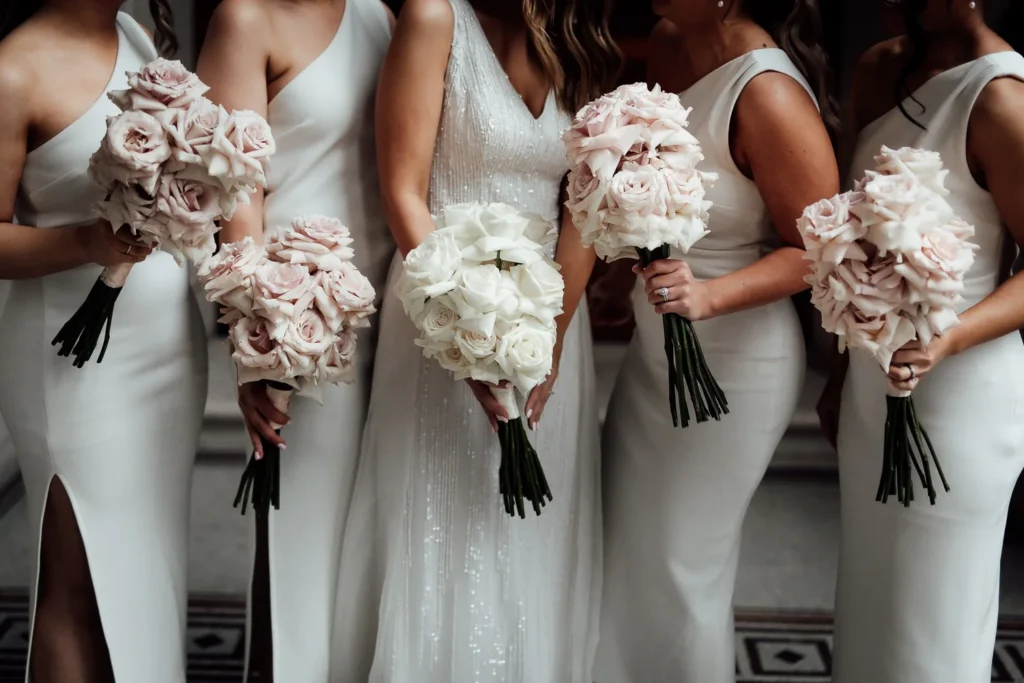
Bouquet size should suit body proportions and the dress silhouette, so flowers for wedding look balanced in portraits. Smaller bouquets can photograph best with detailed gowns, while larger shapes suit minimalist dresses.
Shape also changes the feel. Rounded bouquets read classic, while airy, asymmetrical designs feel modern. Most photographers prefer bouquets that show texture and a clear colour story from a few metres away.
What are buttonholes, corsages, and personal flowers for?
Personal flowers for wedding pieces help key people look coordinated without needing identical outfits. Buttonholes for partners and groomsmen, corsages for parents, and mini posies for flower children are the usual set.
These items also help guests identify roles quickly. In Australia, personal flowers need to be sturdy for hugs, travel, and warm weather, so florists often choose tougher blooms and secure pins or magnets.
How do couples choose flowers for wedding reception tables?
Reception flowers for wedding styling is usually built around guest comfort and sightlines. Low centrepieces and bud vases keep tables conversational, while taller arrangements suit large ballrooms with high ceilings.
Many Australian venues also have strict rules about open flames, hanging installations, and pack-down times. Matching centrepieces to the venue’s lighting and table size often matters more than copying a trend from social media.
What are the main reception floral features beyond centrepieces?
Feature flowers for wedding at the reception are designed to anchor key moments like entrances, speeches, and cake cutting. Common feature areas include the bridal table, a welcome sign arrangement, a bar statement piece, and a cake meadow.
In Sydney and Melbourne venues, florists often create a single large installation that can be photographed from multiple angles. This approach keeps the look impactful without spreading the budget too thin.
Should couples repurpose ceremony flowers into the reception?
Repurposing is one of the smartest ways to stretch flowers for wedding spend. Arbour arrangements can move behind the bridal table, aisle markers can become bar accents, and signing table pieces can go to the cake table.
This is most successful when the florist plans mechanics for movement and the coordinator has a clear run sheet. Many Australian couples schedule a short window between ceremony and reception for transitions.
How should couples pick seasonal flowers in Australia?
Seasonal choices make flowers for wedding fresher, fuller, and often better value. Spring tends to bring abundant colour and soft textures, while summer favours robust blooms that handle heat and transport.
For example, WA and Tasmania can have different availability to NSW or Queensland at the same time of year. A florist will usually suggest a look based on palette and style, then choose the best seasonal stems to match it.
What colours and styles work best with Australian venues?
The best flowers for weddings palettes usually complement the natural setting of the venue. Coastal venues often suit whites, greens, and sandy neutrals, while winery weddings can carry deeper tones and layered textures.
Styling also depends on architecture. Modern city venues in Brisbane or Perth tend to suit clean lines and negative space, while heritage venues often suit abundant, garden-inspired designs that soften stone and timber.
How can couples manage a flowers for wedding budget without compromising?
Budget control starts by focusing flowers for weddings spend on high-visibility areas. Prioritising the bridal bouquet, a ceremony focal point, and one reception statement feature usually gives the best visual return.
They can also reduce costs by choosing fewer varieties, using more foliage and texture, and relying on seasonal stems. Candles, linens, and lighting can add impact without needing more flowers on every surface.
What should couples ask a florist before booking?
They should ask how the florist plans, delivers, and maintains flowers for weddings across the day. Key questions include what is included in setup and pack-down, what substitutions may occur with seasonal availability, and how repurposing will be managed.
It also helps to confirm bump-in access, venue restrictions, and travel fees, especially for regional weddings in the Hunter Valley, Yarra Valley, or Sunshine Coast. Clear expectations reduce last-minute stress.
What is a practical checklist for flowers for wedding planning?
A workable checklist keeps flowers for wedding decisions simple and ordered. It usually starts with overall style, then moves to ceremony needs, personal flowers, and reception features.
They can use this sequence:
- Choose palette and mood (classic, modern, garden, native)
- Lock in ceremony focal pieces and aisle styling
- Confirm bridal party bouquets and buttonholes
- Decide on bridal table and guest table approach
- Add feature moments (welcome sign, cake, bar)
- Plan repurposing and a timing run sheet
How should the flowers for wedding plan come together on the day?
On the day, a good florist and coordinator make flowers for wedding feel effortless by following a tight schedule. They deliver conditioned florals, set ceremony pieces first, then shift to reception styling while photos happen.
The final check is simple: bouquets ready before portraits, ceremony focal point secure and camera-facing, and reception features placed where guests naturally gather. With that, the flowers do what they are meant to do: support the atmosphere without stealing the spotlight.
FAQs (Frequently Asked Questions)
What are the key floral elements typically included in a wedding ceremony setup in Australia?
Wedding ceremony flowers in Australia usually focus on hero pieces that frame the couple and photograph well, including arbour arrangements, aisle markers, and signing table features. Optional additions like pew ends or chair posies may also be used. Due to venue rules and logistics, these pieces are often designed for quick installation and repurposing into the reception to maximise value.
Where should statement ceremony florals be placed for maximum impact during an Australian wedding?
Statement ceremony flowers are best positioned where guests and cameras naturally focus first—typically on the arbour or backdrop. Adding grounded arrangements at the base creates depth. For outdoor beach or garden ceremonies, factors like wind and sun influence placement, so securing mechanics and choosing hardy blooms help maintain arrangement shape throughout the event.
How can couples ensure their outdoor wedding ceremony flowers stay fresh in Australia’s climate?
To keep outdoor ceremony flowers fresh in Australia’s heat, hydration, shade, and timing are crucial. Florists deliver blooms as late as possible and condition delicate flowers until setup. Using sturdy blooms, avoiding direct midday sun, and selecting foam-free water sources help reduce wilting and browning, especially in hotter regions like Queensland and inland NSW.
What considerations go into choosing bridal and bridesmaid bouquets for Australian weddings?
Bridal bouquets often feature premium focal blooms combined with softer supporting textures for close-up photography impact. Bridesmaid bouquets echo the colour palette but in simpler designs. Many Australian couples opt for seasonal flowers to keep bouquets fuller and cost-effective. Bouquet shapes may also be tailored to dress styles—for example, softer garden-style bouquets suit relaxed coastal weddings.
How should bouquet size and shape be selected to complement wedding photos?
Bouquet size should balance body proportions and dress silhouette; smaller bouquets suit detailed gowns while larger ones complement minimalist dresses. Shape influences style—rounded bouquets feel classic, airy asymmetrical designs appear modern. Photographers prefer bouquets that display texture and a clear colour story visible from a few metres away for optimal portrait shots.
What role do buttonholes, corsages, and personal flowers play in Australian weddings?
Personal flowers like buttonholes for partners and groomsmen, corsages for parents, and mini posies for flower children help coordinate key people without identical outfits. They also assist guests in identifying roles quickly. In Australia’s warm climate, florists choose tougher blooms with secure pins or magnets to withstand hugs, travel, and heat throughout the day.
More to read: What Food Safety And Compliance Mistakes Cost Businesses Money?